About Me
Safety changes capacity.
Support begins long before crisis.

Hi, I’m Sorcha Rice.
I’m an AuDHD Occupational Therapist with a PDA nervous system myself, and my work focuses on understanding PDA through the lens of nervous system safety, autonomy, sensory processing, and reduced access.
For many years, I experienced repeated cycles of burnout without fully understanding what was happening in my body or why everyday life often felt so difficult to access from the inside.
That lived experience now deeply shapes both my clinical work and the resources I create.
My work combines:
lived experience
Occupational Therapy knowledge
sensory processing
trauma-informed practice
and nervous system education

My Background
Before completing my Master’s degree in Occupational Therapy, I spent years working and volunteering in a variety of healthcare, childcare, and community settings that profoundly shaped the therapist I am today.
During college in the United States, I volunteered almost every weekend as a nurse’s aide at a medical centre supporting the homeless population in Florida. This experience taught me the importance of human connection, listening without judgement, and recognising the dignity of every person’s story.
I later worked as a medical scribe in a busy emergency room in Orlando, where I witnessed firsthand the realities of healthcare systems, trauma, chronic stress, addiction, and inequality. Around the same time, I volunteered on a medical mission trip to the Dominican Republic, where experiences of cultural difference, systemic inequity, and human connection further deepened my understanding of compassionate care and advocacy.
After college, I worked in an additional needs daycare supporting infants and children with varying developmental and medical needs. Through this role, I developed a deep appreciation for the power of play, co-regulation, responsive caregiving, and relationship-based support.
I also worked as a nanny for a wonderful family, supporting a young child with cerebral palsy. This gave me invaluable insight into the lived reality of caregiving and the importance of collaborative, family-centred therapy. I attended occupational therapy, physiotherapy, speech therapy, and other appointments alongside the family, which reinforced how essential it is for therapy strategies to feel meaningful and achievable within everyday life.
These experiences ultimately led me to complete my Master’s degree in Occupational Therapy and continue shaping my holistic, trauma-informed, neuroaffirming approach today. My work is grounded in connection, safety, autonomy, sensory regulation, and understanding the person behind the behaviour.
Sorcha Rice, AuDHD PDA'erThe most meaningful support begins with feeling safe enough to be understood.


My Approach
I created The Capacity Window™ framework to help explain how pressure builds over time in the nervous system, how access gradually reduces, and why support needs to begin long before crisis.
Through free guides, workshops, downloadable resources, parent consultations, and online education, I aim to help families better understand what is happening underneath behaviour — particularly for PDA nervous systems where traditional approaches often increase overwhelm rather than support access.
What I believe
PDA is not a behaviour problem
Reduced access is not refusal
Regulation cannot be forced
Distress is communication
Autonomy is a nervous system safety need
Safety changes capacity
I also believe truly neuroaffirming practice requires ongoing reflection, listening, and adaptation. None of us will get everything right all the time, and our understanding should continue evolving through lived experience, relationship, research, and the neurodivergent community.
My work is grounded in the belief that neurodivergent children do not need to be fixed. They need environments, relationships, and support that allow their nervous system to feel safe enough to access themselves.
Listen Up
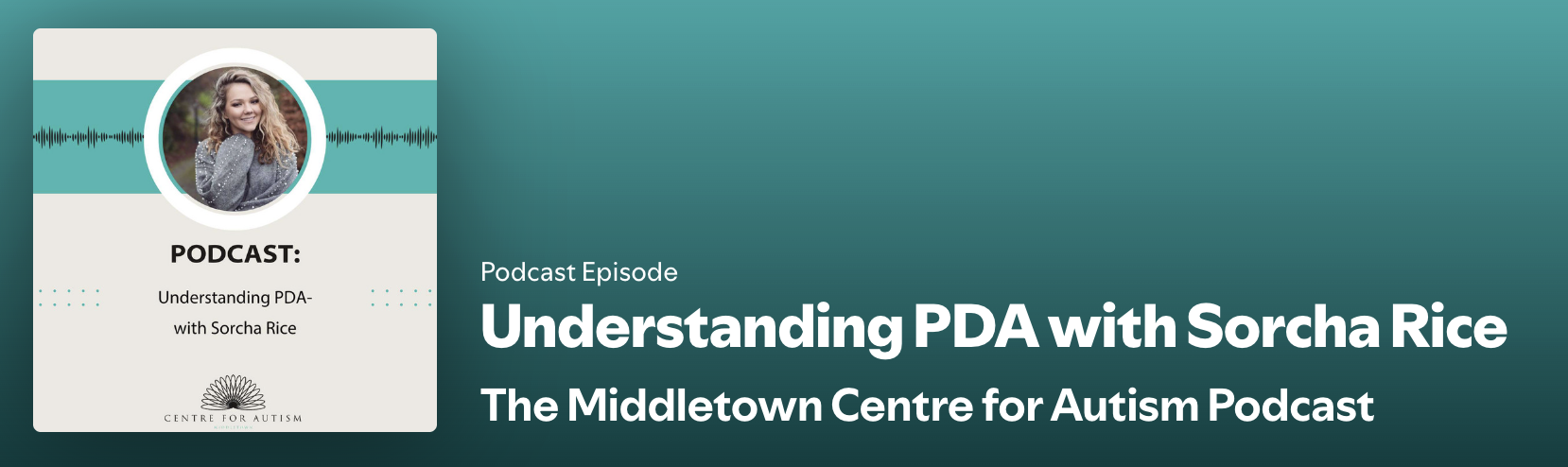
In the latest Middletown Podcast, we chat to Occupational Therapist, Sorcha Rice. Sorcha brings her expertise and lived experience to discuss PDA (Persistent Drive for Autonomy). We discuss what PDA feels like and what supports might be useful at school and at home.
Professional Values & Practice
I am a CORU registered Occupational Therapist and a member of the Association of Occupational Therapists of Ireland (AOTI). My work is guided by the professional and ethical values of occupational therapy practice, alongside ongoing reflection, continued learning, and a commitment to providing safe, respectful, and neuroaffirming support.