The Glimmer library
Nervous System Focused
Parent friendly
Created with lived experience
Regulation before compliance
I created these resources to help families better understand PDA nervous systems through the lens of safety, regulation, sensory processing, and autonomy.
My goal is to create support that feels validating, practical, and accessible — especially for families who feel exhausted by approaches that increase distress rather than reduce it.
This Month's Glimmer
This Month's Glimmer
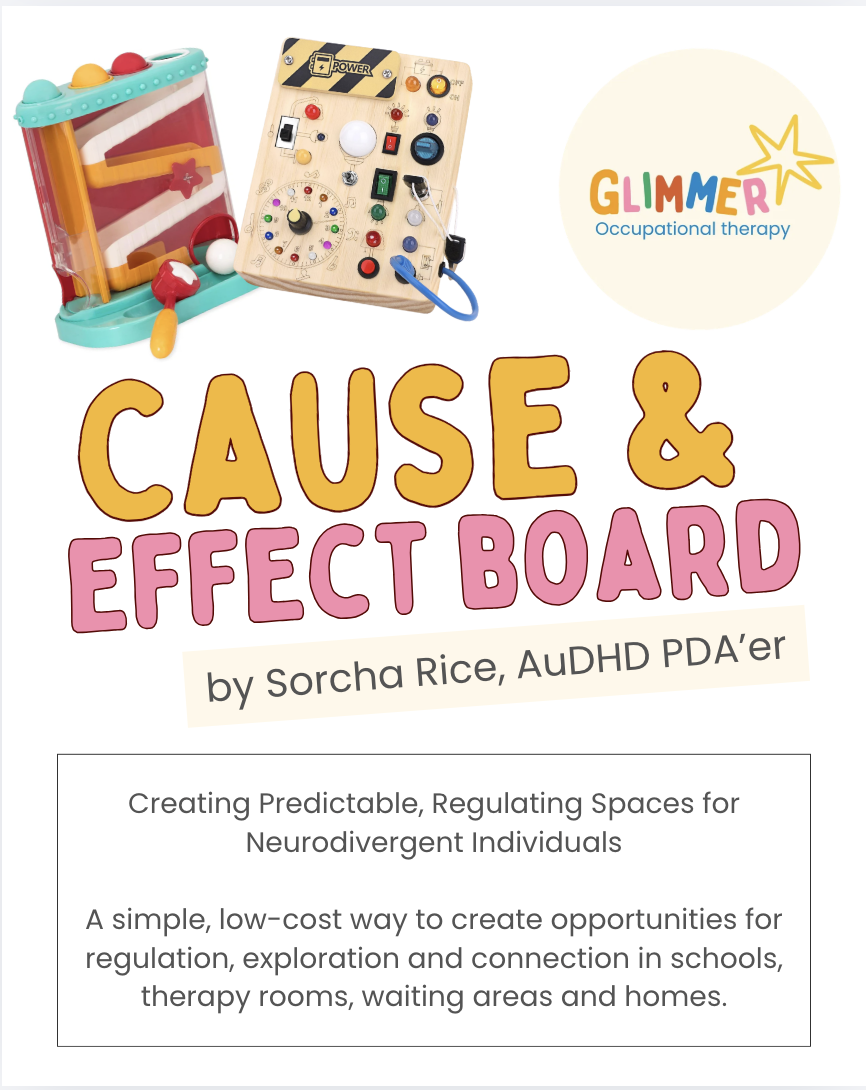
Looking for a simple, low-cost way to create more predictable, engaging, and regulating environments for neurodivergent individuals?
In this free guide, I'll show you how I created a DIY Cause & Effect Board using affordable materials and sensory-friendly ideas that support exploration, autonomy, and connection.
Inside you'll learn:
✓ Why cause and effect activities matter
✓ How they can support autistic individuals, ADHDers, PDAers, and gestalt language processors
✓ Ideas for deep pressure and proprioceptive input
✓ Where to use cause and effect boards
✓ Materials and tools you'll need
✓ Lots of practical examples and inspiration
Perfect for parents, teachers, therapists, schools, clinics, and waiting rooms.
Download your free guide below and start creating spaces that feel more welcoming, predictable, and engaging.
Looking for More Neuroaffirming Resources?
Explore my collection of practical tools, webinars, handouts, guides, and trainings designed to support autistic individuals, ADHDers, PDAers, families, educators, and therapists.
Featured Products
One of the most common pieces of feedback I receive from teachers is:
"We understand the recommendations in the report... but we don't always know how to put them into practice."
This poster was created to bridge that gap.
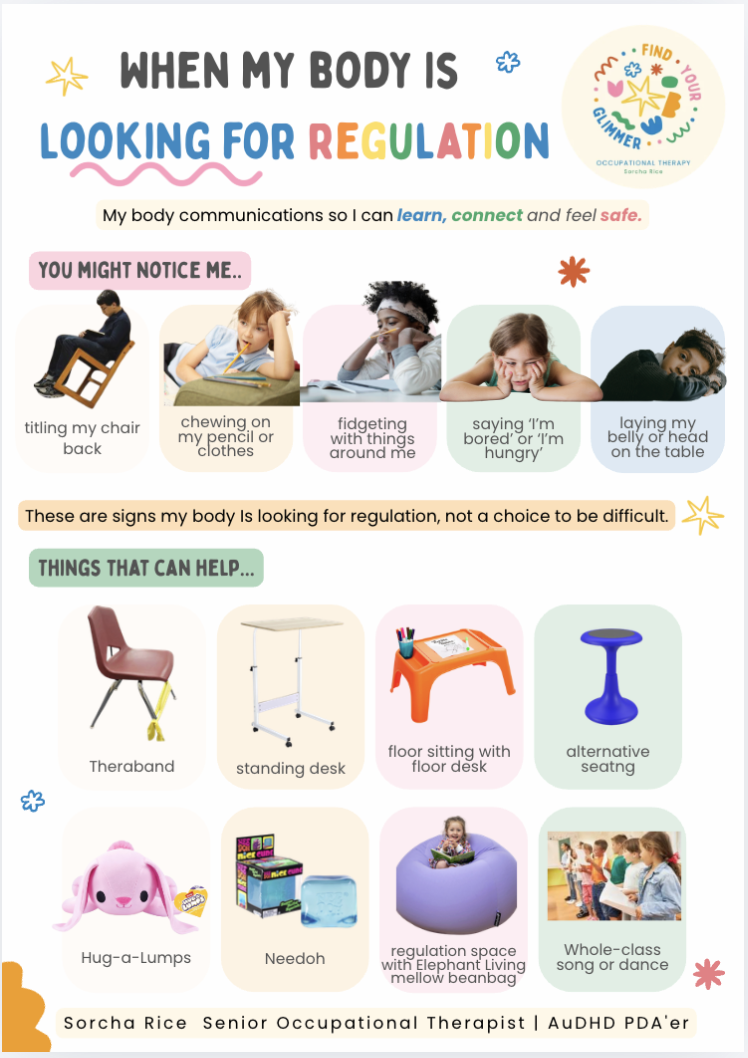
Designed from a nervous system-informed, neuroaffirmative occupational therapy perspective, it helps teachers, SNAs and school staff recognise that behaviours such as changing position, chewing clothing, fidgeting, tilting a chair or saying "I'm bored" may be ways a child is trying to support their regulation while participating in learning—not behaviours to simply stop.
Rather than focusing on compliance, this poster encourages adults to ask:
"How can I support regulation within learning?"
The poster includes:
✨ Common signs a child's body may be looking for regulation
✨ Practical classroom supports that can be implemented immediately
✨ Neuroaffirmative declarative language for adults to model
✨ A reminder that the goal is participation, not stillness
✨ Child-centred statements about what helps children feel safe, understood and supported in school.
Whether you're a teacher, SNA, SET teacher, school leader, occupational therapist or parent, my hope is that this resource encourages us to see behaviour through the lens of the nervous system and to create environments where children can access regulation without shame or judgement.
Because children don't need to earn regulation.
They need environments that make regulation possible.
Free to download and use in classrooms, resource rooms and therapy spaces.
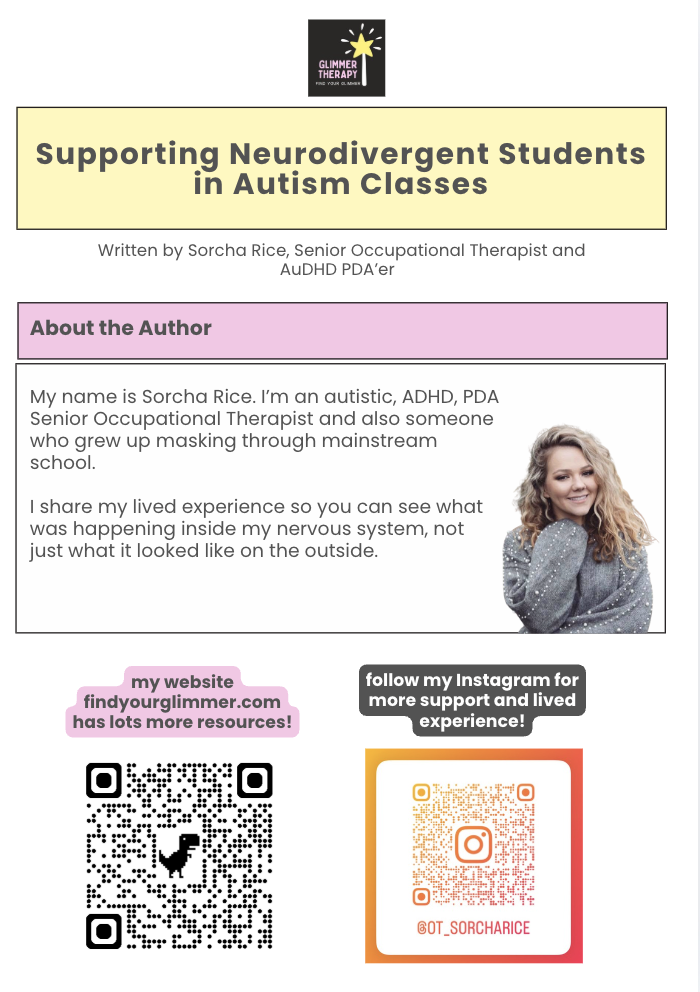
This handout was created to support teachers, SNAs, and school staff working with neurodivergent students in autism classes. Grounded in both occupational therapy practice and lived experience, it explores regulation, sensory needs, communication, autonomy, and nervous system safety within school environments.
Rather than focusing on behaviour management or compliance, this resource encourages a neuroaffirmative, regulation-first approach centred on safety, connection, understanding, and participation.
© 2026 Sorcha Rice.
All content, including written material and frameworks, is protected by copyright. Educational sharing with attribution is permitted. Commercial use or adaptation requires written permission.
FAQS
-
PDA is understood here through the lens of the nervous system rather than behaviour. Demands, uncertainty, sensory overwhelm, reduced autonomy, and social pressure can all create significant nervous system distress and reduced capacity.
-
Many behaviour-based approaches increase pressure, reduce autonomy, and unintentionally activate threat responses within the nervous system. When safety decreases, access to communication, flexibility, and regulation often decreases too.
-
When nervous systems become overwhelmed, access to communication, participation, regulation, and daily life can significantly reduce. What may appear like avoidance or refusal is often a sign that the nervous system no longer feels safe enough to access those capacities in that moment.
-
Many children use enormous amounts of energy masking, coping, and maintaining safety throughout the school day. Home is often the first environment where the nervous system feels safe enough to release accumulated stress and overwhelm.
-
My work is grounded in neurodiversity-affirming, trauma-informed, and nervous-system-informed practice.
I also believe neuroaffirming practice involves ongoing reflection, listening, and learning. I am always open to feedback on the resources I create and continue to evolve my understanding through lived experience, community voices, and continued learning.