 Image 1 of 1
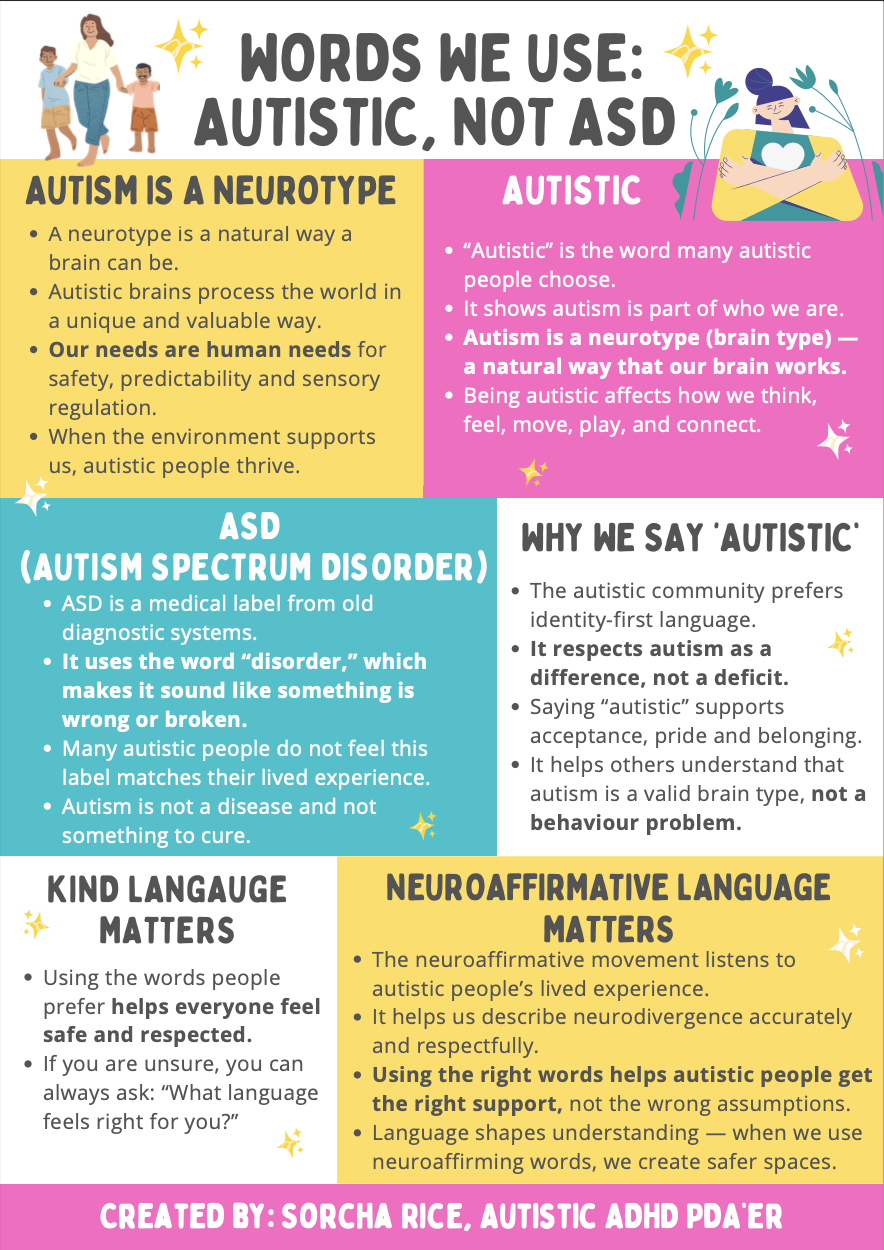
This resource explains why many autistic people prefer the term autistic rather than ASD, and why language matters for safety, dignity, and access to the right support.
It offers a simple, neuroaffirmative explanation of autism as a neurotype, not a disorder, and helps parents, educators, and professionals understand how words shape assumptions, expectations, and responses.
This is useful if you want to:
use language that autistic people actually prefer
move away from deficit-based or medicalised framing
create safer, more respectful environments
support understanding without pathologising
Designed to be clear, shareable, and accessible for schools, families, and professional settings.
This resource explains why many autistic people prefer the term autistic rather than ASD, and why language matters for safety, dignity, and access to the right support.
It offers a simple, neuroaffirmative explanation of autism as a neurotype, not a disorder, and helps parents, educators, and professionals understand how words shape assumptions, expectations, and responses.
This is useful if you want to:
use language that autistic people actually prefer
move away from deficit-based or medicalised framing
create safer, more respectful environments
support understanding without pathologising
Designed to be clear, shareable, and accessible for schools, families, and professional settings.